
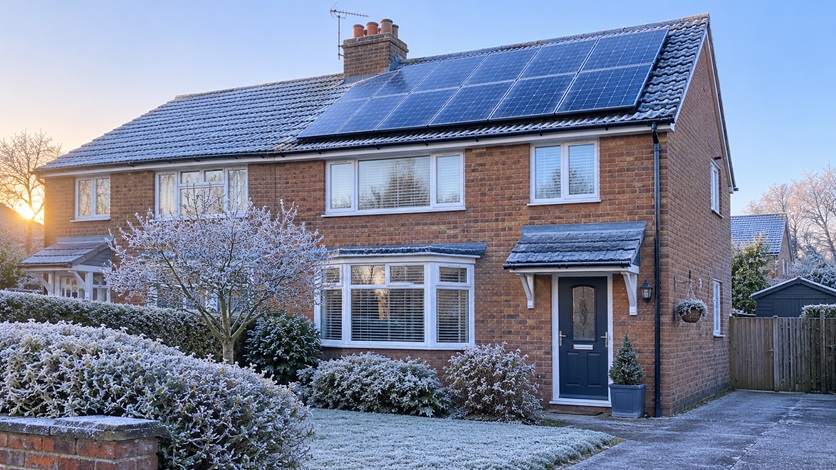
It’s a cold frosty morning. Your house is feeling cosy, but the temperature is hovering around freezing outside and your solar monitoring app is showing less electricity being generated than usual. Does this mean your solar panels have stopped working?
Not at all. In fact, cold weather can actually help solar panels operate more efficiently. Solar panels rely on daylight rather than heat, meaning they can continue generating electricity on frosty, icy and even cloudy days.
So, if you’re wondering do solar panels work in winter, the answer is yes. While shorter days and lower levels of sunlight mean you’ll generally generate less electricity, frost itself is rarely a problem. Here’s what you need to know about getting the most from your solar panels throughout a UK winter.
The Short Answer – Yes, and frost can actually help!
Solar panels continue working in cold weather because they generate electricity from light, not warmth. As long as daylight reaches the panels, they can produce electricity, even when temperatures are below freezing.
What’s more, solar panels are generally more efficient in cooler conditions. This is because excessive heat can reduce their electrical performance.
Solar panels are typically tested and rated at a temperature of 25°C. Above this temperature, their output usually falls by around 0.3% for every additional degree. Below 25°C, the effect works in reverse, meaning panels can produce more electricity for the same amount of sunlight.
This is known as the temperature coefficient. In simple terms, it describes how a solar panel’s performance changes as its temperature rises or falls.
That means a bright, frosty morning can be excellent weather for solar generation. A clear winter day may even deliver better output per hour of daylight than a hot summer day.
Why does solar panel output drop in Winter?
If cold weather can improve solar panel efficiency, why do most UK solar installations generate less electricity during winter?
The main reason is the amount of sunlight available. Winter days are shorter, the sun sits lower in the sky and cloud cover can reduce the light reaching your panels.
In December, the UK gets approximately eight hours of daylight, compared with around 16 hours in mid-summer. This gives your panels considerably less time to generate electricity.
The lower position of the winter sun also means sunlight reaches panels at a different angle, potentially reducing the amount of energy they capture. Add in cloudy skies and dull weather, and overall generation can fall significantly.
- Light frost: Minor impact – usually clears within 1-2 hours of sunlight
- Thin ice: Reduces output until it melts; repeated build-up is worth checking
- Full snow cover: Little or no generation until snow slides off or melts
- Cold, clear day: Output per hour of daylight can outperform a hot summer day
December and January are generally the least productive months for UK solar panels. However, this doesn’t mean your system has stopped working. It simply means there is less daylight available to convert into electricity.
Frost vs Ice vs Snow – What Actually Stops Solar Panels Working?
Frost, ice and snow can all affect solar panel generation, but they don’t necessarily cause the same problems.
Light frost
A thin layer of frost on your solar panels is unlikely to cause a significant loss of electricity over the course of the year. Once the sun rises and daylight reaches the panels, the frost will usually melt naturally, often within an hour or two.
You generally don’t need to do anything if your panels are covered in a light layer of frost.
Ice
Ice can be more troublesome, particularly if it builds up repeatedly or forms a thicker layer across the panel surface. It can reduce the amount of sunlight reaching the solar cells, lowering electricity generation until it melts.
If you regularly notice ice forming on your panels, it may be worth checking whether water is collecting around the installation or whether there is an issue with drainage.
Snow
A thick covering of snow is more likely to stop your panels generating electricity. If the solar cells are completely covered, very little sunlight will reach them.
Fortunately, solar panels are usually installed at an angle and have relatively smooth glass surfaces, which can help snow slide off as it melts. How quickly this happens depends on the panel angle, the amount of snow and the surrounding weather.
A note on safety: Never climb onto a frosty, icy or snow-covered roof to clear your solar panels. Slippery roof surfaces are extremely dangerous. For DIY solar panels installed on accessible sheds or garages, only consider clearing them if you can do so safely from ground level without touching or damaging the panels.
4 ways to get more from your solar panels this Winter
Although you cannot control the British weather, there are several ways to help your solar setup perform as well as possible during the colder months.
1. Consider Your Panel Angle
The sun sits lower in the sky during winter, so the angle of your solar panels can influence how much sunlight they capture.
A steeper panel angle can be beneficial for winter generation and may also help snow slide off more easily. If you’re installing a new DIY solar panel system, consider the available mounting options and whether an adjustable setup would suit your needs.
2. Add Battery Storage
With shorter winter days, making the most of the electricity your panels generate becomes even more important.
A solar battery allows you to store surplus electricity produced during daylight hours and use it later, such as during the evening when your panels are no longer generating.
Battery storage can help you make better use of your solar energy throughout the year. Explore our solar battery storage solutions to find out how you could make your setup more flexible.
3. Keep Panels Clear of Leaves and Shading
Fallen leaves, dirt and shading from nearby trees can reduce the amount of sunlight reaching your solar panels.
Check your installation periodically to make sure there are no obvious obstructions. Trees can also cast longer shadows across panels during winter because the sun is lower in the sky.
Avoid attempting to clean panels from an unsafe position or using anything that could scratch the glass.
4. Choose a Solar Kit Designed Around Your Needs
If you’re planning a new solar installation, think about how much electricity you want to generate throughout the year, rather than focusing only on summer performance.
Consider your available roof or ground space, your typical energy consumption and whether you want to include battery storage. A properly sized system can help you make the most of available daylight, even during the darker months.
We specialise in bespoke solar microsystems and DIY solar solutions, helping you choose equipment that suits your requirements.
The bottom line for UK solar panel owners
Solar panels absolutely can work in frosty and icy weather. In fact, cold temperatures can improve their efficiency, while frost will usually clear naturally once the sun comes out.
The biggest challenge for UK solar owners during winter isn’t the cold – it’s shorter days, a lower sun and reduced daylight. Although electricity generation will generally be lower than in summer, your panels can still contribute useful energy throughout the colder months.
So, don’t write off solar power when the temperature drops. With the right panel positioning, suitable equipment and battery storage, a well-planned solar setup can continue helping you generate renewable electricity all year round.
Ready to make the most of solar this winter?
Plan your winter-ready DIY solar kit with ABC Renewables. Explore our range of solar panels, batteries and mounting accessories to find a solution suited to your property and energy requirements.