
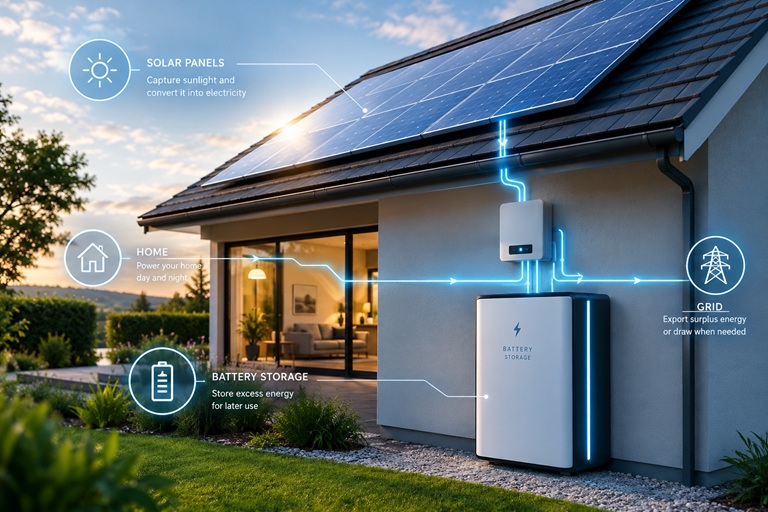
Adding a battery to your solar panel system can help you make better use of the electricity your panels generate. Instead of relying on the grid when your solar panels aren’t producing, you can store surplus energy during the day and use it later.
However, choosing the right solar battery storage capacity is important. A battery that is too small may not store enough of your excess solar energy, while a battery that is unnecessarily large could provide more capacity than you regularly need.
So, what size solar battery do you need? The answer depends on your electricity consumption, solar panel system, daily routine and future energy requirements.
Why Solar Battery Size Matters
Solar panels typically generate most of their electricity during daylight hours. For many households, however, electricity consumption is higher in the morning and evening when solar generation is lower.
Battery storage helps bridge this gap. Excess electricity generated during the day can be stored and then used when your panels are producing less energy.
The aim isn’t necessarily to store every unit of electricity your solar panels produce. Instead, the right home solar battery size should complement your generation and consumption patterns.
Understanding Battery Capacity in kWh
Solar battery capacity is normally measured in kilowatt-hours (kWh). This tells you how much energy a battery can store.
For example, a battery with a 5kWh capacity can theoretically store up to 5kWh of usable energy, although the amount available for everyday use can depend on factors such as the battery’s usable capacity and operating requirements.
When comparing solar battery capacity options, it’s therefore important to look beyond the headline capacity and check the manufacturer’s specifications.
A larger capacity isn’t automatically better. The objective is to choose a battery that matches the amount of electricity you are likely to generate and use.
How Much Electricity Does Your Home Use?
Your household’s electricity consumption is one of the most important factors when deciding on solar battery storage.
Start by looking at your electricity bills or smart meter data to understand how much electricity you typically use each day. You should also consider when you use the most electricity.
A household that uses a lot of electricity in the evening may benefit from having more stored energy available after sunset. Conversely, if much of your electricity consumption happens during daylight hours, there may be less need for a large battery.
Your daily consumption provides a useful starting point, but it shouldn’t be the only consideration.
Matching Battery Capacity to Your Solar Panel System
Your solar panel system and battery should work together. If your panels generate only a relatively small amount of surplus electricity, installing a very large battery may mean that its full capacity isn’t regularly used.
Equally, a household with a larger solar array may generate enough surplus electricity to make greater battery capacity useful.
For example, we supply DIY solar panel kits alongside solar energy battery storage solutions. When considering a battery, the output of your solar panels should be assessed alongside your household electricity requirements.
Daytime vs Evening Energy Consumption
Think about when your home uses electricity…
During the day, your solar panels can supply electricity directly to appliances and other electrical loads. If your solar panels generate more electricity than you are using, the surplus can potentially be stored in a battery.
In the evening, when solar generation falls, stored electricity can then be used.
This makes your daily routine an important consideration when choosing battery storage for solar panels. Two homes with identical electricity consumption could have different storage requirements if their patterns of energy use are different.
Factors That Affect Battery Size
Several factors can influence the solar battery capacity you need, including:
- Solar panel output: A larger solar array may produce more surplus electricity to store.
- Daily electricity consumption: Higher consumption can increase your potential need for stored energy.
- Time of energy use: Evening and overnight usage can make battery storage particularly useful.
- Available installation space: The physical size and installation requirements of the battery need to be considered.
- Budget: Larger batteries generally represent a greater investment.
- Existing solar equipment: Compatibility with your current solar panels, inverter and electrical setup is important.
- Future energy requirements: Your electricity consumption may increase over time.
Considering these factors together is more useful than choosing a battery based solely on its kWh rating.
Should You Allow for Future Energy Needs?
It can be worth thinking about how your energy requirements could change over the coming years.
Perhaps you are considering an electric vehicle, installing additional solar panels or increasing your electricity use at home. These changes could affect how much energy you want to store.
We specialise in solar microsystems and supply products including: DIY solar panel kits, solar battery storage systems, grid-tie inverters and EV chargers. Considering your longer-term plans can help you develop a system that remains suitable as your energy requirements evolve.
Examples of Different Household Requirements
A smaller property with modest electricity consumption and a relatively small solar installation may only require a smaller battery to make effective use of excess generation.
A typical family home with greater electricity consumption, particularly during the evening, may benefit from a larger storage system.
Meanwhile, a property with a larger solar array and high electricity usage may have greater potential to make use of additional battery capacity.
These examples demonstrate why there isn’t one universal answer to the question, “what size solar battery do I need?”
Getting the right solar product from ABC Renewables
Choosing the right solar battery storage capacity involves more than looking at your average electricity bill. Your solar generation, consumption patterns, existing equipment, available space and future plans all need to be considered.
Here at ABC Renewables we offer solar energy products for domestic, remote and off-grid applications, including DIY solar panel kits and our solar battery storage solutions. We focus on DIY solar microsystems meaning that customers can consider their wider energy requirements rather than simply selecting a battery based on capacity alone.
Before investing in solar battery storage, take the time to understand how much electricity your home generates and consumes, when you use it and how your requirements could change in the future. With the right-sized system, battery storage can help you make better use of your solar generation and reduce your reliance on electricity from the grid.
We have some exciting new Solar Battery Storage products, currently only available via our ABC Renewables – eBay shop