
DIY solar panels are becoming an increasingly popular option for UK homeowners looking to generate their own electricity and reduce their reliance on the grid. However, not every property has a suitable roof for solar panels, and there are several alternative locations worth considering.
From house roofs and garages to garden sheds and ground-mounted systems, the best place to install DIY solar panels depends on your available space, sunlight exposure and how you intend to use the electricity generated.
In this guide, we’ll explore the different places where you can install DIY solar panels, the advantages and disadvantages of each option, and what you should consider before choosing a location.
1. Installing DIY Solar Panels on Your House Roof
A house roof is one of the most common locations for solar panels because it can provide a large area exposed to sunlight without taking up additional garden space.
If your roof has a suitable orientation, minimal shading and sufficient structural strength, it may be a good location for a DIY solar panel system.
Advantages:
- Makes use of existing roof space without sacrificing garden space.
- Can accommodate a larger array, depending on the roof’s size and layout.
- May provide good exposure to sunlight when the roof is positioned appropriately.
Disadvantages:
- Working at height introduces significant safety risks.
- The roof must be structurally suitable and in good condition.
- Mounting equipment and installation can be more complex than for a ground-level system.
Before installing panels, check the roof’s condition, pitch, orientation and exposure to shading from trees or neighbouring buildings. South-facing roofs can offer strong annual generation in the UK, although east and west-facing roofs can also be effective.
DIY installation does not remove the need to follow applicable building regulations, electrical safety requirements and grid-connection rules. If the installation involves working at height or connecting a system to your home’s electrical supply, professional assistance may be necessary.
2. Installing Solar Panels on a Garage or Shed
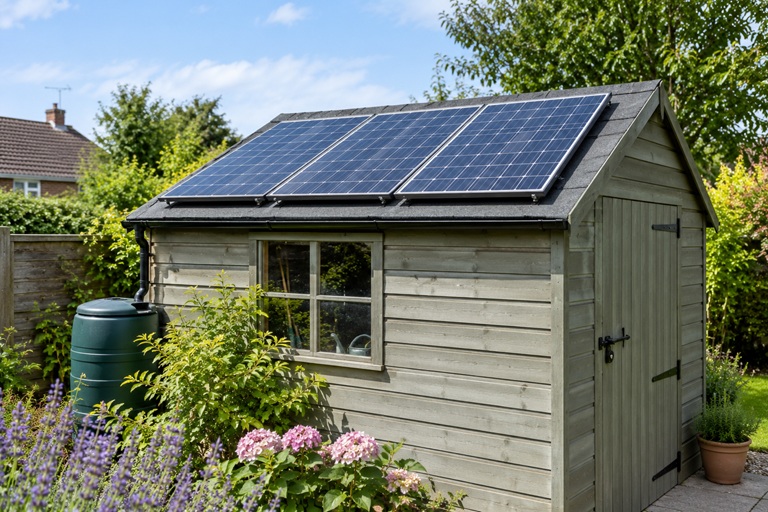
Garages, sheds and workshops can be excellent locations for DIY solar panels, particularly if you want to generate electricity close to where it will be used.
For example, a solar panel system could help power lighting, charge batteries or operate selected equipment in a workshop. A suitably designed system could also supply a garden building, depending on its energy requirements.
Advantages:
- Uses existing roof space on an outbuilding.
- Can generate electricity close to appliances and equipment.
- May be suitable for smaller DIY solar projects and off-grid applications.
Disadvantages:
- Older or lightweight roofs may not support the additional weight.
- Trees, fences and neighbouring buildings may create shading.
- Cable runs between the panels and the equipment they power can add complexity and cost.
Before installing panels, make sure the roof is strong enough to support the mounting structure and panels, taking wind and other loads into account. You’ll also need to consider how cables will be routed safely and whether a battery is needed to store electricity for use outside daylight hours.
For workshops and garden sheds without a convenient mains supply, a suitable off-grid solar kit can be a practical solution.
3. Installing DIY Solar Panels on a Flat Roof
Flat roofs, including those found on garages, extensions and some garden buildings, can provide another option for solar panel installation.
Unlike pitched roofs, flat roofs often allow panels to be mounted on angled frames. This can help you choose a suitable orientation and tilt for the available space.
Advantages:
- Makes use of otherwise unused roof space.
- Offers flexibility when choosing panel angles and positioning.
- May be suitable where a pitched roof is unavailable or unsuitable.
Disadvantages:
- Additional mounting equipment may be required.
- Wind loading and secure anchoring need careful consideration.
- Poorly planned installation can interfere with drainage or damage waterproofing.
Flat roofs need particular attention because the mounting system must be appropriate for the roof’s construction and weather exposure. Some systems use ballast, while others require mechanical fixings; the right approach depends on the roof and the mounting equipment.
Check the roof’s load capacity, waterproofing and drainage before proceeding. Avoid assuming that a flat roof is suitable simply because it has enough space for the panels.
4. Installing Free-Standing or Ground-Mounted Solar Panels in a Garden
If your roof isn’t suitable, you may be able to install DIY solar panels in your garden using a free-standing frame or a more permanent ground-mounted structure.
This option can be particularly useful for properties with available outdoor space, garden offices, workshops or off-grid projects.
Advantages:
- Panels can be positioned in a sunny area away from roof obstructions.
- Ground-level access can make cleaning and maintenance easier.
- Offers an alternative when roof installation isn’t practical.
- Some smaller systems can be adjusted or relocated, depending on their design.
Disadvantages:
- Takes up usable garden space.
- Panels may be more exposed to accidental damage or vandalism.
- Frames must be securely anchored against strong winds.
- Larger installations may require groundwork and additional planning.
Choose a location with minimal shading and enough space to access the panels safely. The mounting structure must be designed for the panels and local weather conditions, while outdoor cables need suitable protection against damage.
A smaller free-standing system may be suitable for supplementary electricity generation, whereas a larger ground-mounted array could support greater energy requirements. The right choice will depend on your available land, budget and system design.
5. Installing DIY Solar Panels in a Garden Office or Caravan Setup
DIY solar panels can also be useful for garden offices, cabins and certain caravan applications, particularly where access to a mains electricity supply is limited.
A garden office may need electricity for lighting, computers and charging devices, while a caravan setup might require power for lighting, refrigeration or other appliances. The system you choose will depend on how much electricity you use and when you need it.
Advantages:
- Can provide electricity in locations away from the main house.
- May reduce reliance on a conventional electricity supply.
- Can be combined with battery storage for use after sunset.
Disadvantages:
- Smaller systems may not generate enough electricity for high-power appliances.
- Battery storage and compatible electrical components can increase the overall cost.
- Caravan installations require suitable equipment and secure mounting for mobile use.
For these applications, an off-grid solar panel kit can be worth considering. Before purchasing, calculate your expected electricity consumption and check that the panels, charge controller, inverter and battery are compatible with your requirements.
Remember that UK solar generation varies throughout the year, so a system that performs well in summer may produce considerably less electricity during the shorter days of winter.
6. What Should You Check Before Installing DIY Solar Panels?
Once you’ve identified a potential location, there are several important factors to consider before installing your solar panels.
- Sunlight and shading: Choose a location that receives as much unobstructed sunlight as possible. Trees, fences and neighbouring buildings can significantly reduce generation.
- Roof or ground suitability: Make sure the roof, mounting frame or ground can safely support the installation, including the effects of wind and weather.
- Panel orientation and angle: Positioning the panels appropriately can improve their exposure to sunlight and overall performance.
- Cable routing: Plan how electricity will travel from the panels to your inverter, battery or appliances. Outdoor cables need suitable protection.
- System size: Match the number of panels to your expected electricity consumption and available space.
- Future expansion: If you plan to add panels or battery storage later, check that your equipment can accommodate the additional capacity.
You should also check the relevant planning requirements before starting work. In England, rules for roof-mounted and stand-alone solar installations differ, and the permitted development rules for stand-alone solar equipment were updated on 27 August 2026.
Requirements can depend on the location and type of installation, so check the latest Planning Portal guidance before proceeding. Rules may differ elsewhere in the UK.
Finally, remember that DIY installation does not mean you can overlook electrical safety. Grid-connected systems may need to meet network connection and notification requirements, while electrical work must comply with applicable regulations.
Consult a qualified electrician where necessary.
7. Choosing the Right DIY Solar Panel Kit from ABC Renewables
Finding the right installation location is only the first step. You’ll also need a solar panel kit that suits your available space, energy requirements and intended application.
At ABC Renewables, you can explore our solar products and solutions for DIY projects, bespoke solar systems and off-grid electricity generation.
When comparing your options, consider the panel output you need, the mounting equipment required and whether battery storage would help you make better use of the electricity generated.
For example, a small system for a shed may have very different requirements from a larger installation intended to supply a garden office or remote property. Choosing compatible components from the outset can help you build a system that meets your needs.
Conclusion
There are several places where you can install DIY solar panels, including house roofs, garages, sheds, flat roofs, gardens and ground-mounted frames. Each option has its own advantages and limitations, so the best choice will depend on your property, available space and electricity requirements.
If your roof isn’t suitable, a shed, garage or free-standing garden system could provide a practical alternative. For larger energy requirements, a carefully planned ground-mounted array may offer greater scope for expansion.
Before installing your panels, assess sunlight exposure, structural suitability, cable routing and applicable UK regulations. With the right location and equipment, you can take an important step towards generating your own renewable electricity.
Explore our range of DIY solar panel products and off-grid solutions from ABC Renewables to find a DIY solar setup suited to your home project.