
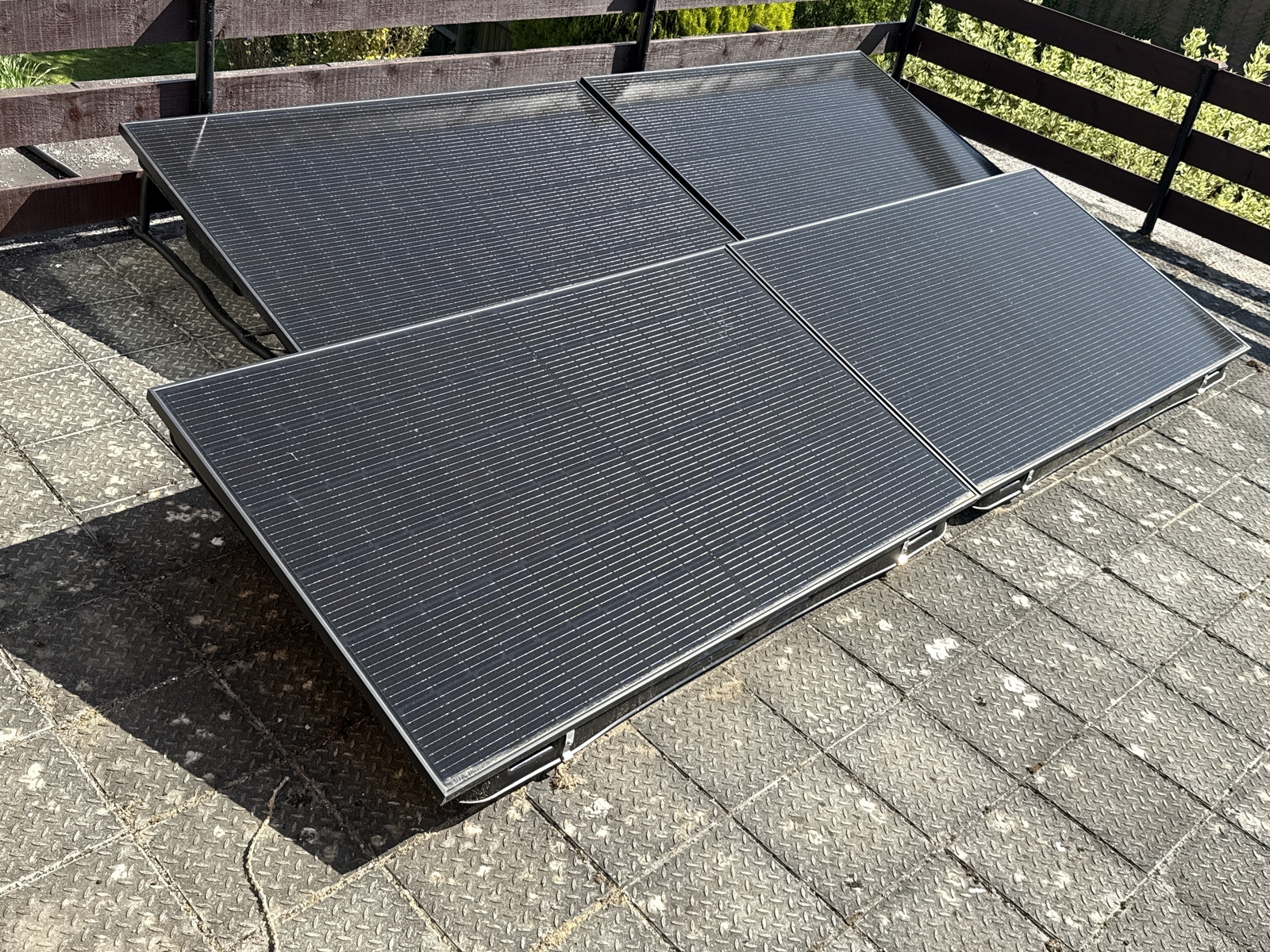
Solar panels are an increasingly popular way for UK homeowners to generate renewable electricity, but installing them on a roof isn’t always the best option. If you have a garden, outbuilding or available land, free-standing and ground-mounted solar panels can provide an alternative.
Although the terms are sometimes used interchangeably, there are differences in how these systems are designed, installed and used. Understanding the pros and cons of each can help you choose the right solution for your property, whether you’re looking to power a garden office, reduce household electricity costs or create an off-grid solar system.
In this guide, we’ll explore the differences between free-standing and ground-mounted solar panels in the UK and explain which option might be best for your needs.
What Are Free-Standing Solar Panels?
Free-standing solar panels are mounted on an independent frame or stand rather than being attached directly to a roof or building. They can be positioned in a suitable outdoor location to capture sunlight and generate electricity.
These systems vary considerably in size. A small setup might consist of one or two panels on a simple support, while a larger installation could include several panels connected to an inverter and battery storage system.
Free-standing solar panels are particularly useful for gardens, sheds, workshops, garden offices and other locations where roof installation isn’t practical. They can also form part of a DIY solar project or an off-grid electricity system.
Pros of Free-Standing Solar Panels
- Flexible positioning: You can often position the panels in a sunny area away from buildings, trees and other sources of shade.
- Accessible maintenance: Panels mounted at a convenient height can be easier to inspect and clean than rooftop systems.
- Suitable for smaller projects: They can be a practical solution for powering selected appliances, lighting or equipment in a shed or garden office.
- Potentially straightforward installation: Some smaller systems can be assembled by competent DIY users, provided the mounting and electrical requirements are met.
- Flexibility for future changes: Certain lightweight or adjustable setups can be repositioned if your requirements change, although permanent frames may not be easy to move.
Cons of Free-Standing Solar Panels
- Space requirements: Panels take up usable garden or patio space that could otherwise be used for other purposes.
- Exposure to damage: Ground-level panels may be more vulnerable to accidental impacts, pets and vandalism.
- Wind exposure: Stands need to be properly secured to prevent movement or damage during strong winds.
- Potentially limited capacity: Smaller stands may not accommodate enough panels to meet the electricity needs of an entire household.
- Cable management: Outdoor wiring must be routed and protected appropriately to minimise damage and reduce electrical risks.
For smaller projects, free-standing solar panels can offer a convenient way to generate electricity without making major changes to your property.
What Are Ground-Mounted Solar Panels?
Ground-mounted solar panels are installed on a supporting structure fixed to the ground. The structure may use posts, ground screws, concrete foundations or another suitable mounting method, depending on the size of the system and the conditions at the installation site.
These installations can range from relatively small domestic arrays to larger systems designed to generate a substantial amount of electricity. They are particularly useful for properties with sufficient outdoor space but unsuitable roof space, poor roof orientation or significant shading.
Ground-mounted panels can also be incorporated into off-grid systems, where the electricity generated is used alongside battery storage to supply a property or outbuilding.
Pros of Ground-Mounted Solar Panels
- Greater scope for larger systems: Available land can allow you to install more panels than a small stand-mounted setup.
- Flexible orientation: Panels can be positioned and angled to make better use of available sunlight, depending on the site.
- Easier access for maintenance: Ground-level installations can make cleaning, inspection and repairs more convenient.
- Suitable for battery storage: Larger arrays can be paired with compatible batteries and inverters to store surplus electricity for later use.
- An alternative to rooftop solar: They can be particularly useful when a roof is unsuitable because of its condition, orientation or available space.
Cons of Ground-Mounted Solar Panels
- Potentially higher installation costs: Ground preparation, mounting structures, foundations and labour can increase the overall cost.
- More land required: Larger arrays need sufficient clear space and may affect how you use your garden or land.
- Planning considerations: Depending on the installation and location, planning permission or other approvals may be required.
- Ground conditions can complicate installation: Sloping land, poor drainage, difficult soil conditions and underground services may affect the design.
- More involved installation: Larger or permanent systems may require professional design, groundwork and electrical installation.
Ground-mounted solar panels are often worth considering if you want a more substantial system and have enough suitable land to accommodate it.
Free-Standing vs Ground-Mounted Solar Panels: What’s the Difference?
The main difference is usually the mounting structure, scale and intended purpose of the installation. It’s worth noting that free-standing solar panels can technically be a type of ground-mounted system, so the terminology isn’t always consistent between suppliers.
The following bullet points compare the typical characteristics of each approach:
- Typical application:
- Free-standing: Sheds, gardens and smaller DIY projects
- Ground-mounted: Domestic arrays and larger solar systems
- Mounting structure:
- Free-standing: Independent stand or frame
- Ground-mounted: Fixed framework, posts or foundations
- Space requirements:
- Free-standing: Often suitable for smaller areas
- Ground-mounted: May require more available land
- Flexibility:
- Free-standing: Some systems can be adjusted or relocated
- Ground-mounted: Usually designed for a fixed position
- Maintenance:
- Free-standing: Generally accessible at ground level
- Ground-mounted: Generally accessible at ground level
- Installation costs:
- Free-standing: Can be lower for simple setups
- Ground-mounted: May be higher due to groundwork
- System capacity:
- Free-standing: Often suited to smaller requirements
- Ground-mounted: Can accommodate larger arrays
- Battery storage:
- Free-standing: Possible with compatible equipment
- Ground-mounted: Possible with compatible equipment
These are general comparisons rather than strict rules. A large free-standing array may need substantial foundations, while a small ground-mounted system can be relatively straightforward to install. The best choice depends on your property, budget and electricity requirements.
Which Solar Panel Option Is Best for Your Property?
Choosing between free-standing and ground-mounted solar panels depends on what you want to power and how much space you have available.
For a garden shed or workshop
A smaller free-standing system may be sufficient if you want to power lights, charge devices or run a few low-power appliances. You could also consider adding a compatible battery to store electricity for use when the panels aren’t generating enough power.
For a garden office
If you use a garden office regularly, you’ll need to calculate its electricity requirements before choosing a system. Computers, lighting, heating and other appliances can significantly affect the amount of energy you need. A larger free-standing or ground-mounted array may be appropriate, depending on the available space and expected demand.
For a home with an unsuitable roof
Ground-mounted solar panels can be a useful alternative if your roof has limited space, an unsuitable orientation or significant shading. With enough land, you may be able to position the panels in a more favourable location.
For off-grid living
Both options can form part of an off-grid solar system. However, you’ll need to consider more than the panels themselves. Battery capacity, inverter sizing, daily electricity consumption and seasonal variations in solar generation all influence how well the system performs.
For larger electricity requirements
If you want to generate a substantial proportion of your household’s electricity, a larger ground-mounted array may offer more scope for expansion. The feasibility will depend on available land, installation costs and the suitability of the site.
What Should You Consider Before Installing Solar Panels?
Before choosing a mounting option, there are several practical factors to consider.
- Orientation and shading: Choose a location with good exposure to sunlight. Trees, fences and nearby buildings can reduce solar generation, particularly during winter.
- Mounting angle: The angle of the panels affects how much sunlight they receive. A suitable fixed angle should be selected for your location and intended use.
- Weather resistance: The mounting structure must be appropriate for UK weather conditions, including strong winds and heavy rain. Secure anchoring is particularly important for exposed sites.
- Electrical requirements: Ensure your panels are compatible with the inverter, charge controller and battery, if required. Electrical installations must use appropriate protection and comply with applicable regulations.
- Planning permission: Check the rules that apply to your property before installing a permanent structure. Requirements can vary depending on the location, design and circumstances, particularly in designated areas.
- Budget: Compare the total cost of the system, including panels, mounting equipment, wiring, installation and any battery storage, rather than looking at panel prices alone.
- Future expansion: If you might want to add more panels later, make sure the mounting structure and electrical system can accommodate the additional capacity.
It’s also worth considering how you’ll use the electricity generated. A system designed to power a small shed will have different requirements from one intended to supply a house throughout the year.
Explore Solar Panel Solutions from ABC Renewables
Whether you’re planning a small garden installation or a more substantial off-grid system, choosing the right solar equipment is an important first step.
At ABC Renewables, you can explore solar products and solutions for DIY solar panel projects, battery storage and off-grid electricity generation. Consider your available space, energy consumption and budget when comparing solar panel kits and the equipment needed to build a suitable system.
Taking the time to plan your installation can help you avoid unnecessary costs and choose a setup that meets your requirements both now and in the future.
Conclusion
Both free-standing and ground-mounted solar panels offer practical alternatives to rooftop solar, particularly for UK properties with suitable outdoor space.
Free-standing panels can be an attractive option for smaller projects, garden buildings and supplementary electricity generation. Ground-mounted systems, meanwhile, can provide greater scope for larger arrays and may be better suited to properties with higher energy requirements.
Ultimately, the right option depends on your available land, electricity needs, budget and installation requirements. By comparing the advantages and disadvantages of each approach, you can make a more informed decision and take the next step towards generating your own renewable electricity with ABC Renewables.